F50 SailGp, the fastest catamarans on the planet
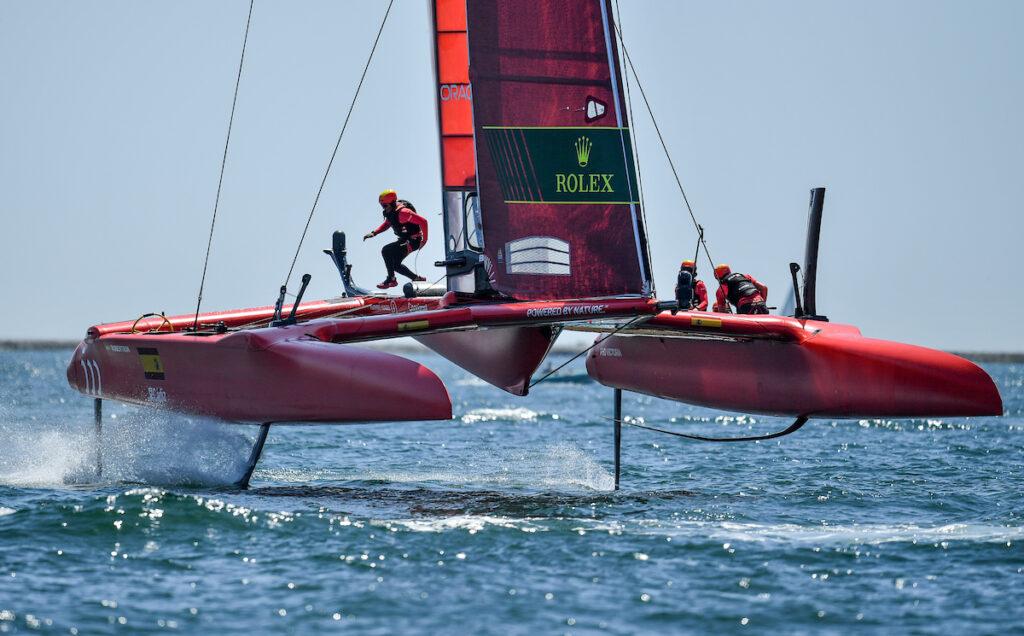
SailGP’s F50 foiling catamarans are perhaps the most innovative sailing boats on the planet, but their development is not an isolated effort.
The constant pursuit of technological excellence in the sailing world has resulted in a community of engineers and designers working together to push the boundaries of what is possible.
This means that technological advances in one type of catamaran can directly influence others, whether they are intended for high-level competition or recreational enjoyment.
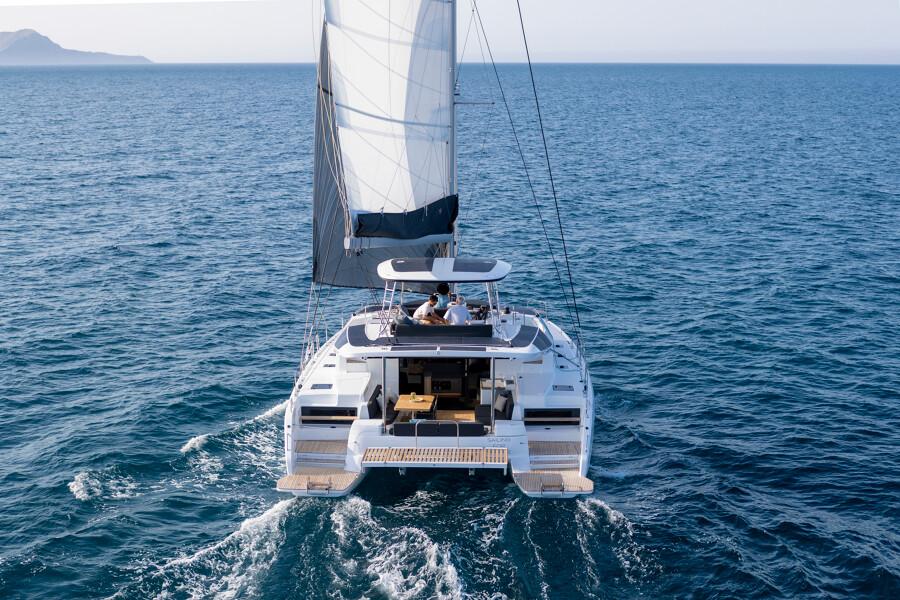
The Technological Link between SailGP F50 Catamarans and Lagoon Catamarans: Innovation Flowing in Two Directions
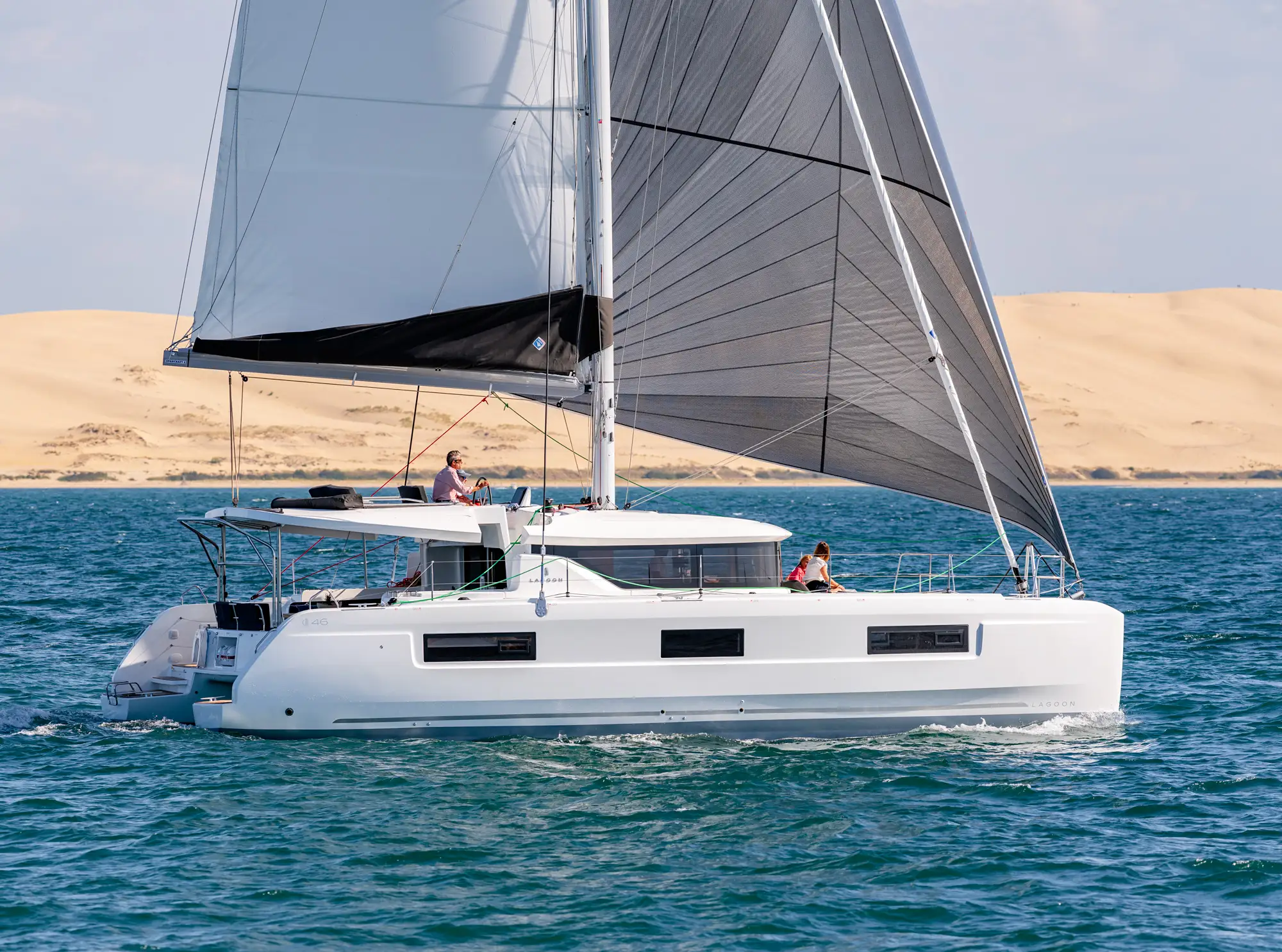
In the exciting world of catamarans, technology collaboration and knowledge transfer are not limited to high-level racing, such as SailGP’s F50s.
In fact, this stream of innovation also finds its way into the design and development of more leisure-oriented catamarans, such as the Lagoon brand catamarans.
While these two types of catamarans may seem very different in purpose, they share a technological link that has driven remarkable advances in both fields.
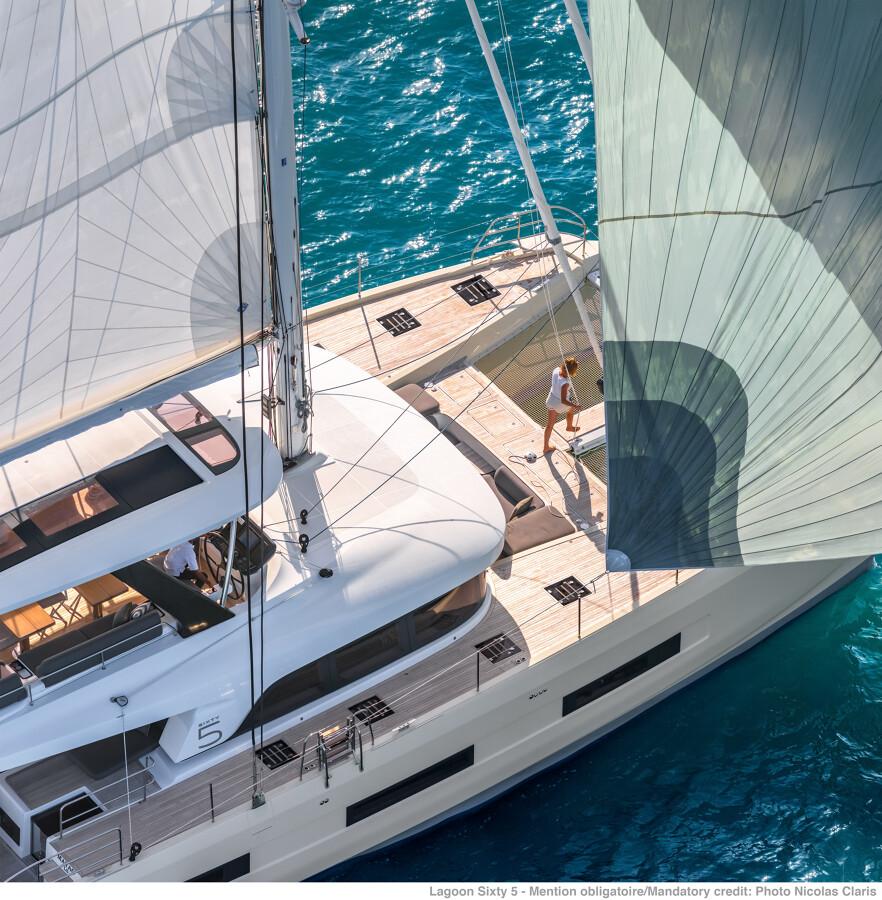
Sharing the Spirit of High Performance Sailing
While SailGP’s F50 catamarans are designed specifically for high-level sailing competition, their cutting-edge technology has influenced the way other catamarans are designed and built, including recreational catamarans such as those of the Lagoon brand.
The pursuit of speed, efficiency and safety that characterizes the F50 has led to the implementation of technological innovations in all areas of catamaran sailing.
The Impact of Technological Advances at Lagoon
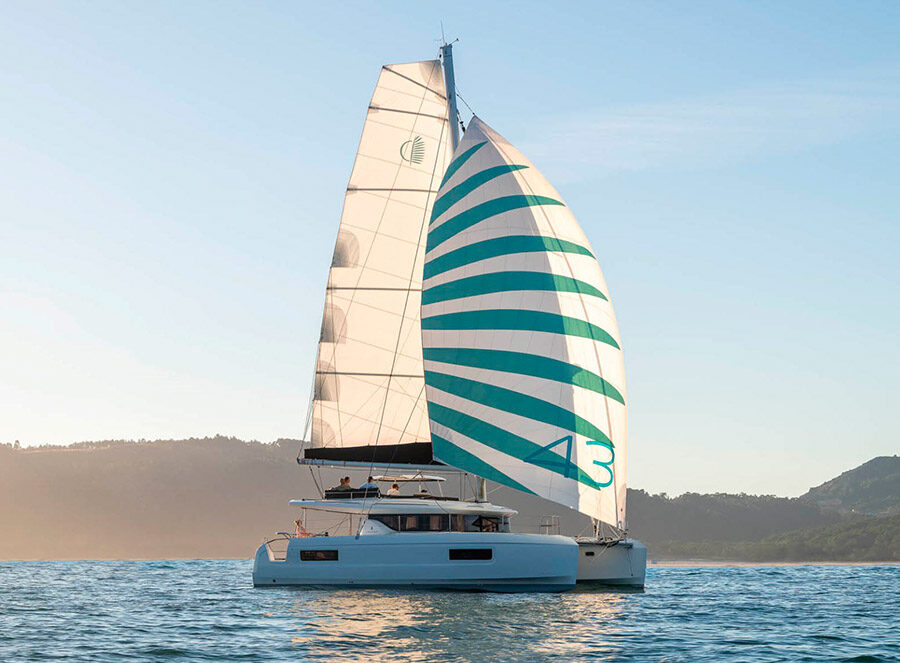
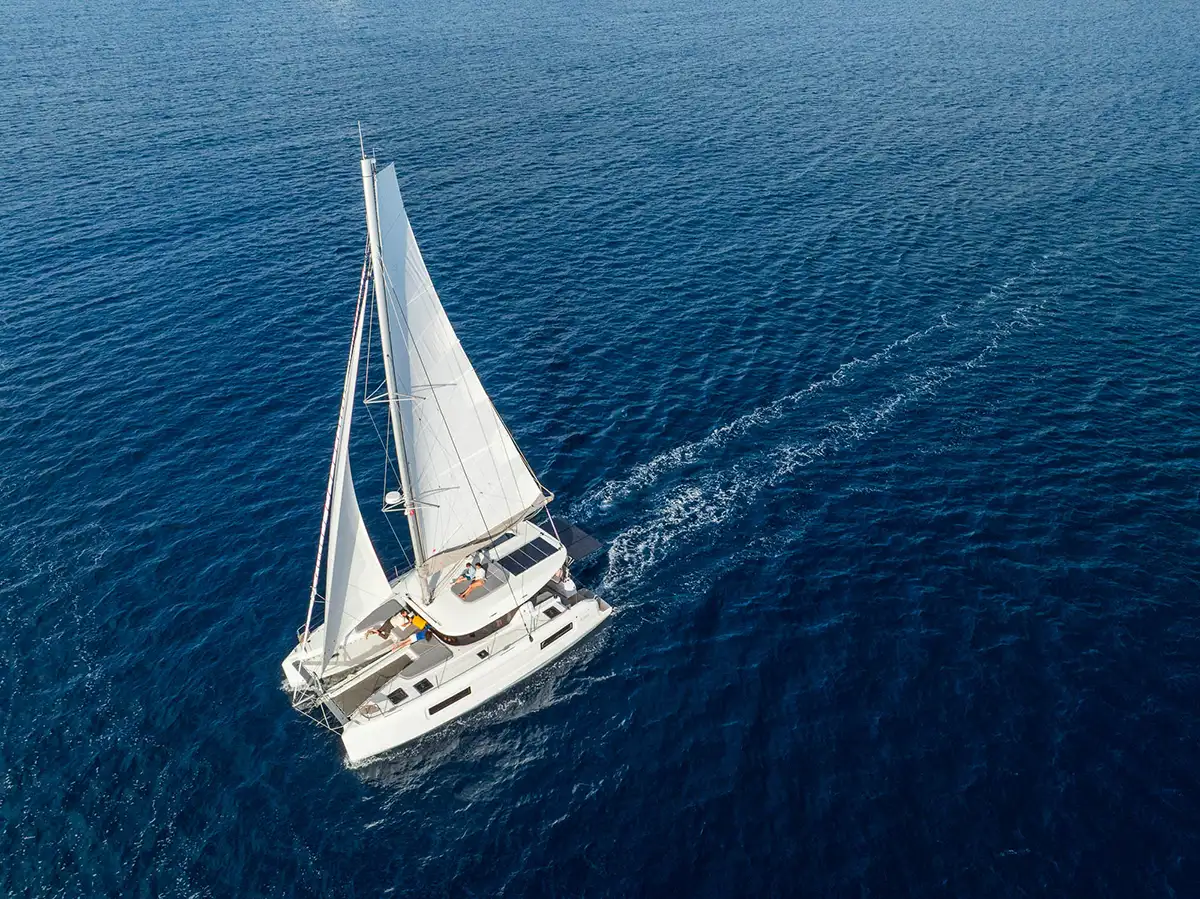
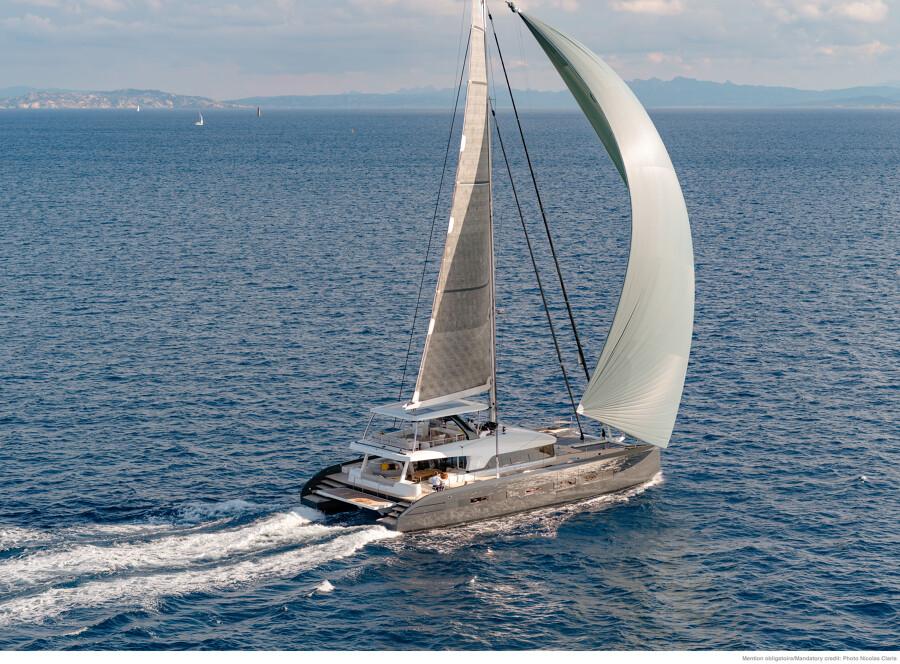
Lagoon catamarans, known for their comfort and versatility in recreational boating environments, have also embraced remarkable technological advances, allowing recreational boaters to enjoy enhanced performance and efficiency in their voyages.
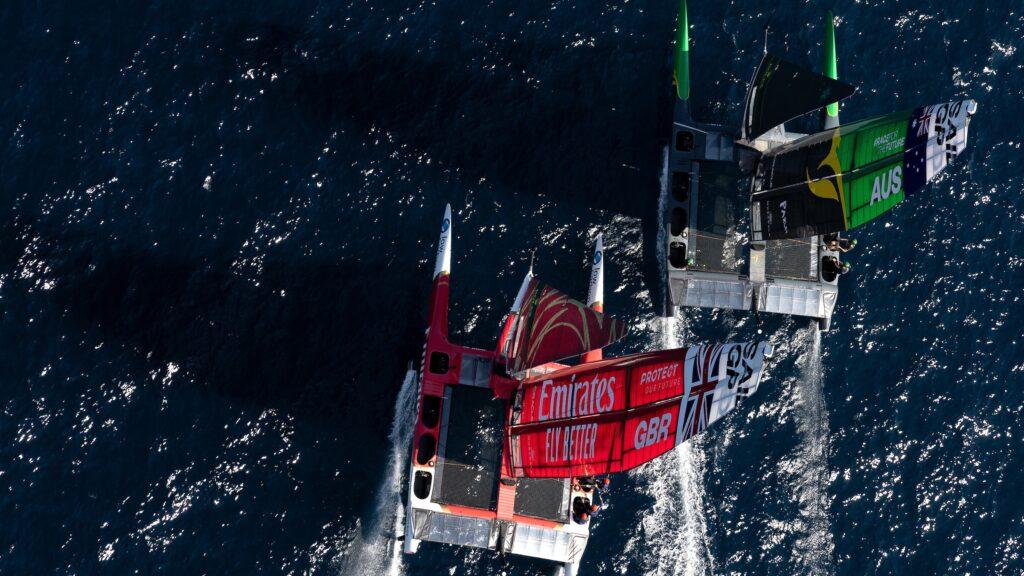
The Combination of Speed and Comfort
While SailGP’s F50 catamarans may stand out for their extreme speed in high-performance racing, Lagoon catamarans offer a more relaxed and comfortable sailing experience.
However, thanks to the technology transfer between these two spheres, Lagoon catamarans have managed to combine speed and efficiency with comfort and luxury, offering recreational sailors a unique experience that fuses the best of both worlds.
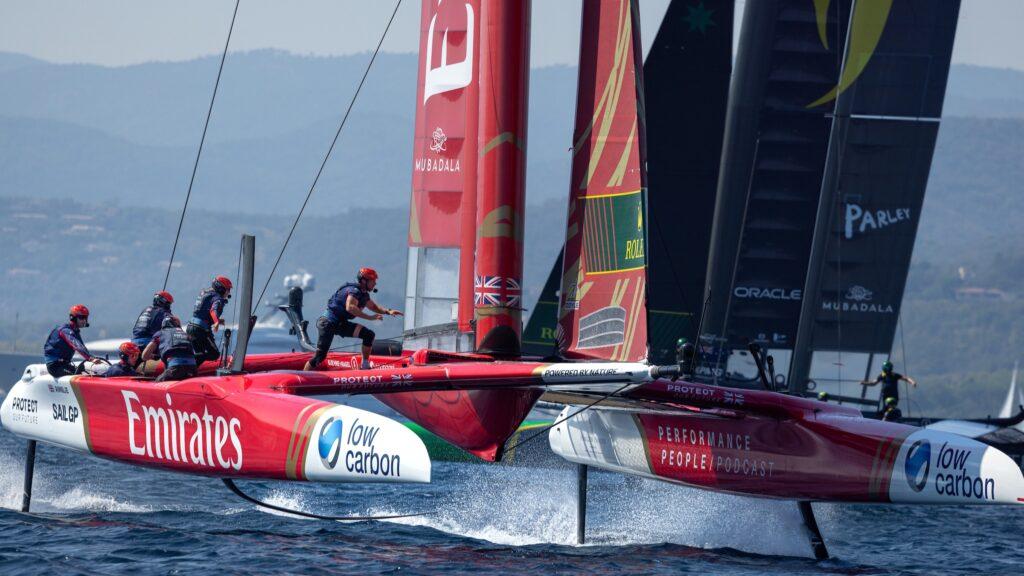
How F50s sail faster than the wind
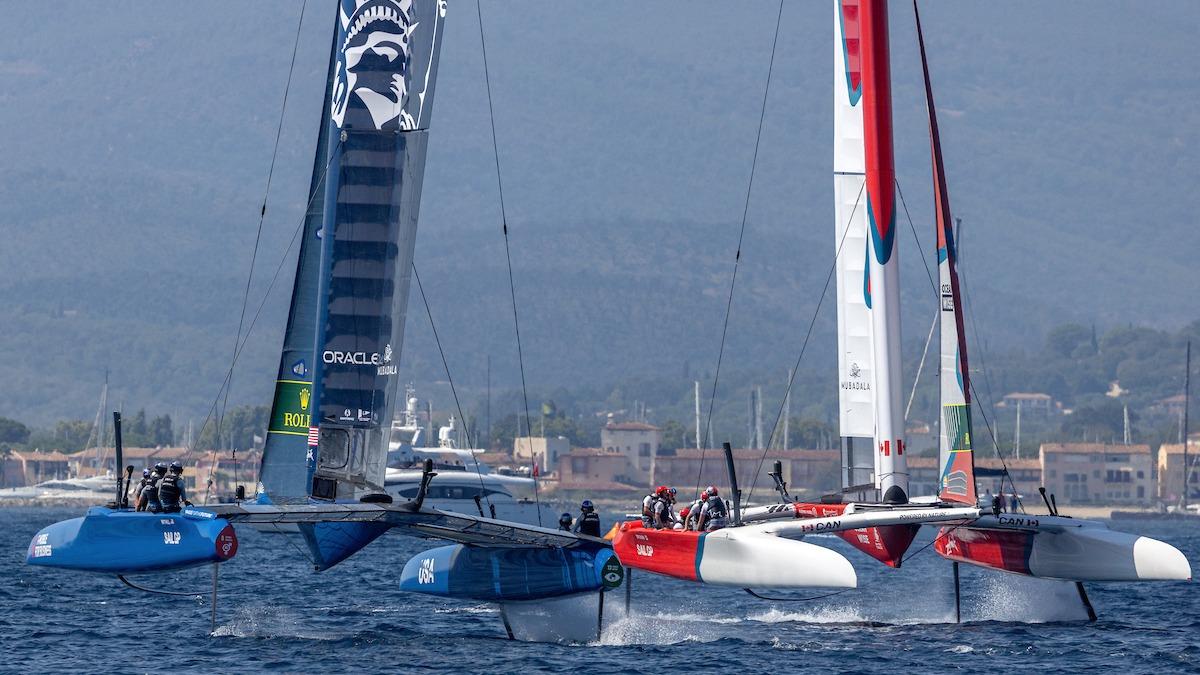
SailGP’s F50 foiling catamarans are undoubtedly the crown jewels of the sailing world.
They are capable of reaching impressive speeds, sometimes up to four times the speed of the wind that drives them. But how do they do it?
Although it may seem counterintuitive, the idea of sailing faster than the driving wind is not new.
In fact, it is a feat that many sailboats are capable of achieving if they sail at the right angle to the wind.
This is called ‘upwind’ and ‘tacking’, which is why we often see SailGP boats zigzagging during races.
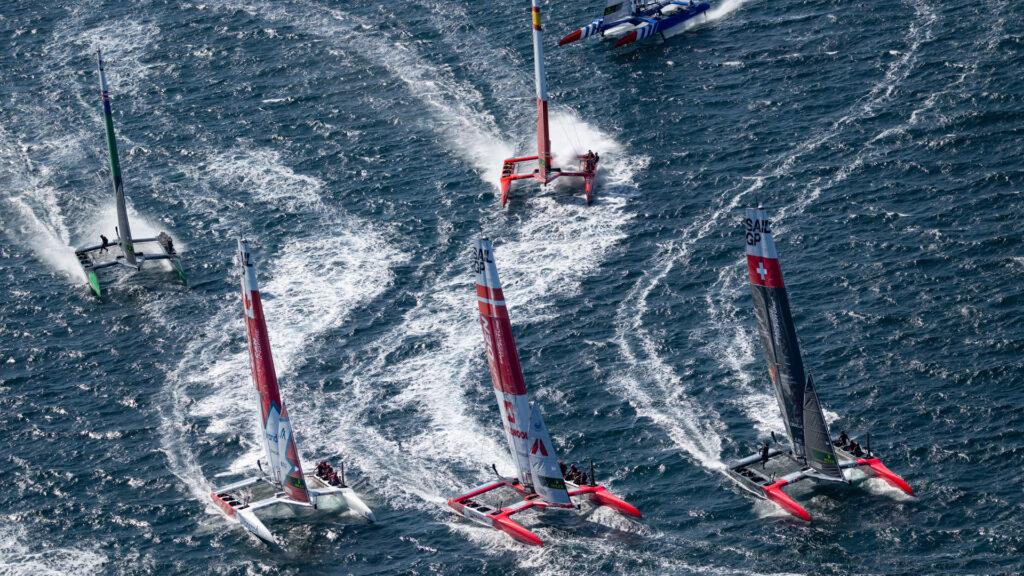
Taking advantage of the "apparent wind
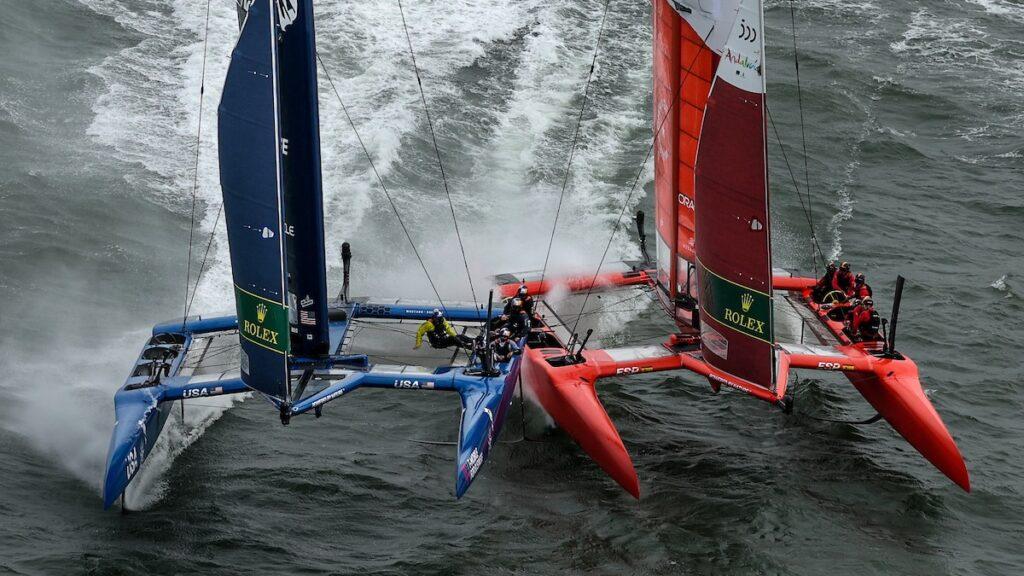
SailGP boats have the incredible ability to travel up to four times faster than the wind that propels them.
They do this by harnessing what sailors call ‘apparent wind’: this is the force generated when an object moves through the air.
This is a sensation similar to riding a bicycle or reaching out the window of a moving car.
On the other hand, the ‘real wind’, the one that makes flags flutter or shakes the leaves on trees, is the one that sailors use to move their ship forward when they hoist their sails.
Then, as they move through the air, the sails begin to generate the so-called ‘apparent wind’.
This combination of real and apparent wind speed is what allows traditional boats to sail up to 1.5 times faster than the wind.
Defying the Laws of Physics
So how do F50s defy the laws of physics to fly at speeds faster than the wind that propels them?
The answer to that question boils down to one basic principle: the elimination of ‘drag’.
Drag is the braking effect that water exerts when it sticks to the hull of a ship moving over it.
The more surface area of the hull that comes into contact with the water, (yacht designers call this ‘wetted surface’), the more the boat’s speed is limited.
Traditional racing yachts are designed to minimize the wetted surface as much as possible.
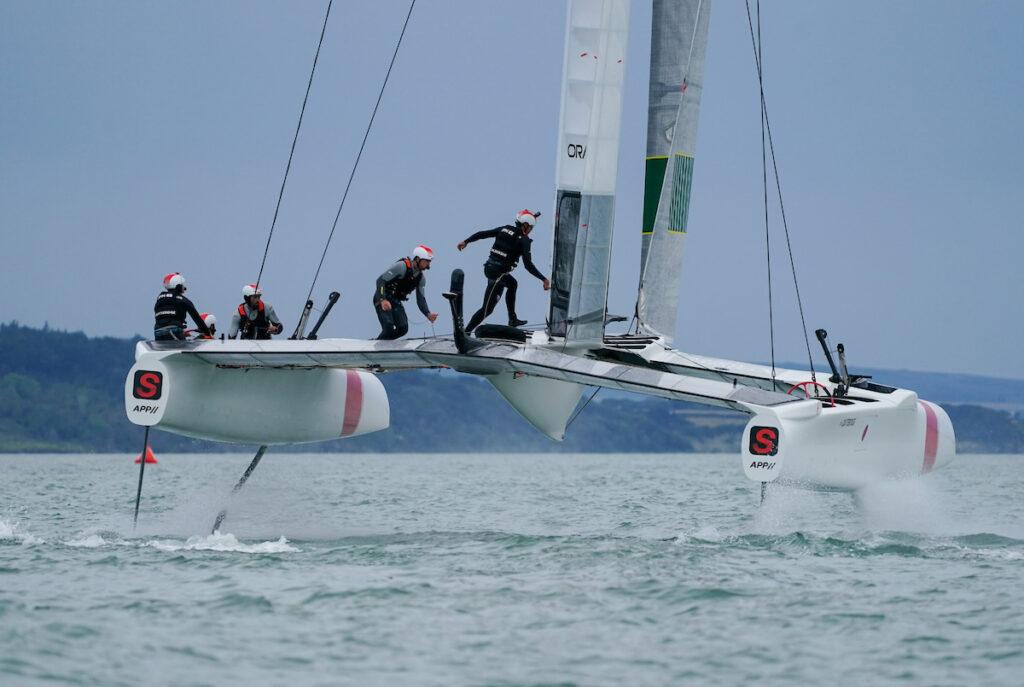
In this regard, the introduction of foiling systems means that boats move through the water on “hydrofoils”.
This system allows hull drag to be completely eliminated.
The minimal wetted surface of the hydrofoil in contact with the water allows the foilers to free themselves from the constraints of drag, enabling boats with this feature to reach surprising speeds.
The "Vuelta Seca" in the SailGP
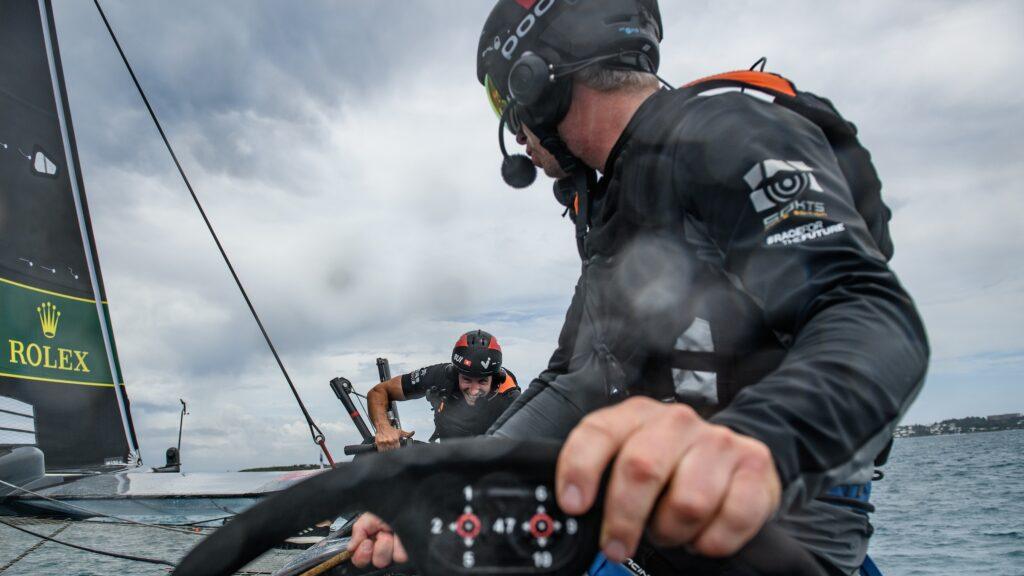
In SailGP, they call it a ‘dry lap’ when the team completes a full leg of the course without the hull touching the water.
Only the F50s with the most experienced crew used to achieve a ‘dry lap’ just a few years ago.
Today, with time and technological advances, it has become almost a standard and virtually 100% of SailGP teams achieve it.
The studied size of the F50
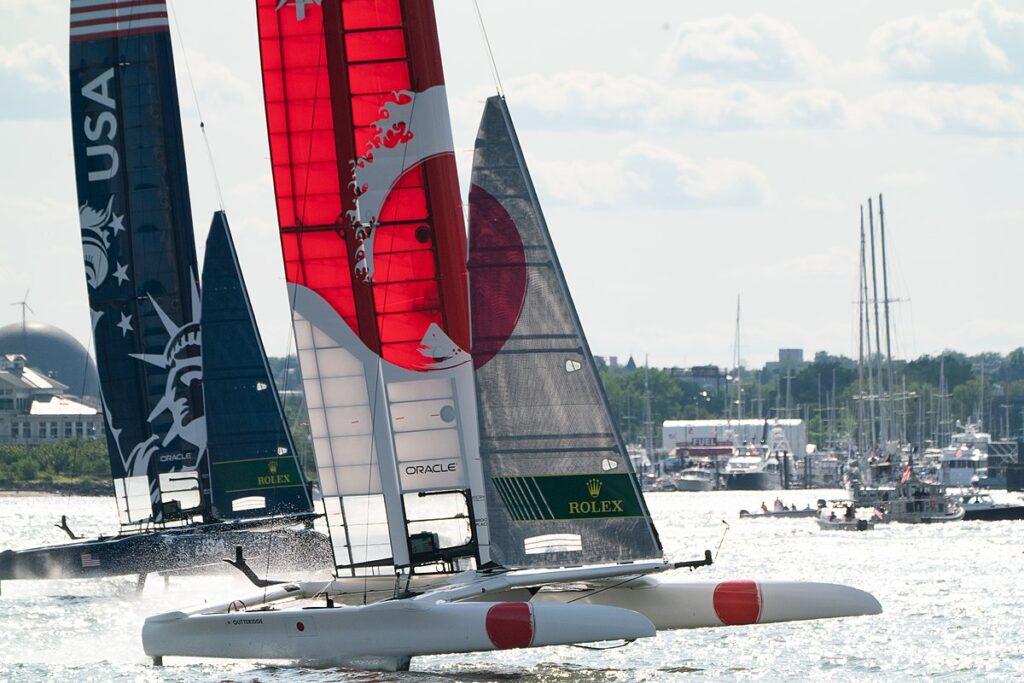
Before we talk about how the careful and thoughtful design of the hydrofoils lifts the boats out of the water, it is worth noting that the F50s are long, wide and light catamarans for their size.
In sailing terms, this is the ideal platform for efficiently converting wind energy into forward motion.
The F50’s dimensions, 15.24 meters long and 8.8 meters wide, play an important role in generating the power and speed needed to operate its hydrofoils.
These catamarans are light and very wide, giving them the power to accelerate up to 1.5 times the wind speed.
This speed is fast enough to allow them to rise out of the water when lift is added to the hydrofoils.
Sails like airplane wings
However, as efficient as the F50 platform itself is, it also requires a considerable amount of energy to get moving and accelerate to the right speed for the hydrofoils to do their job.
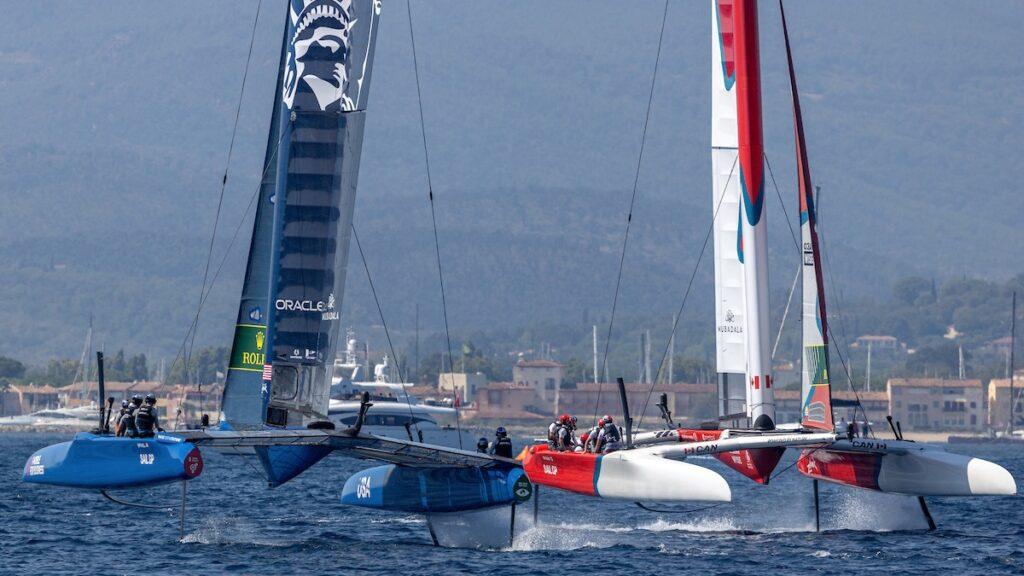
The system for distributing this energy does not come from a conventional sail, but from an extremely complex “three-dimensional wing sail”.
Operating in the same way as an aircraft wing, but mounted vertically, when blowing over the “leading edge” of the sail, the wind must travel a greater distance over its surface.
This additional distance generates a pressure difference between one side of the wing and the other, and, just as in an airplane, where the result of that difference is lift, in the case of the F50, the result is forward motion.
The control systems built into the F50’s modular wings are so advanced, they can be fully articulated by the sailors to change shape as needed and provide just the right amount of power at any given moment.
These configurations are called ‘twist’ and ‘camber’, and finding the right combination can generate a considerable speed advantage in the heat of competition.
F50 SailGP underwater secret
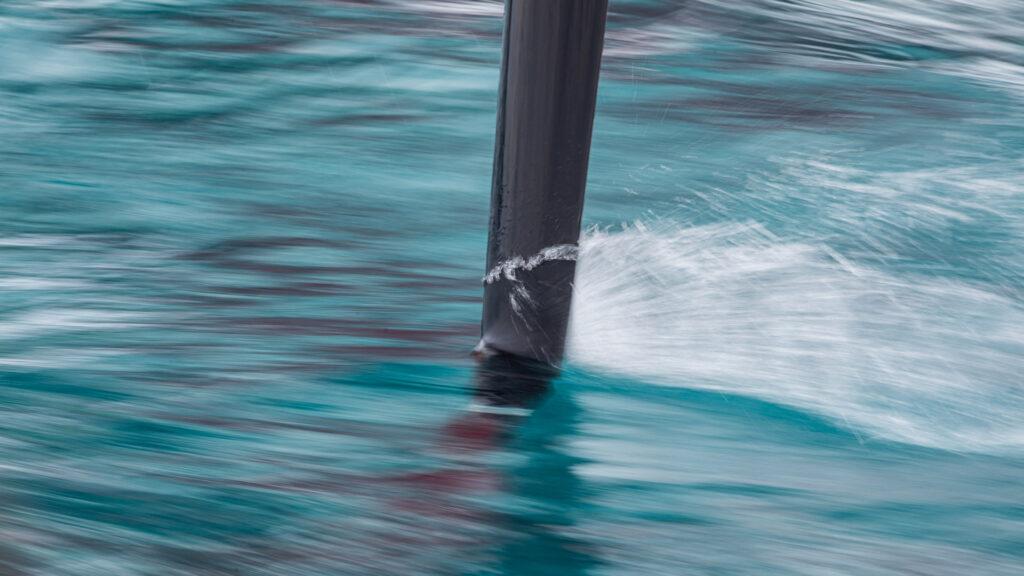
Last but not least in the F50’s stunning design are the underwater appendages: two straight-bladed rudders that terminate in T-shaped sections called ‘elevators’, and a pair of L-shaped carbon daggerboards.
The daggerboards are constructed of high-strength carbon fiber, and can be raised and lowered individually, as well as adjusted laterally and longitudinally.
In addition to preventing the boat from drifting sideways, like the keel of a traditional sailboat, the horizontal sections at the ends of the aluminum hydrofoils generate hydrodynamic lift as the water flows over them and the boat moves forward.
Tilting the hydrofoil aft increases the angle of attack and generates more lift, while tilting it forward decreases lift and can even generate a downward force if needed.
At the same time, at the rear of the F50, vertical rudder blades allow the ship to be steered by twin ‘steering wheels’, which also allow each tail to be tilted independently.
In this way each of the horizontal wings can generate lift or downforce independently of each other.
Consequently, getting the boat to fly faster than the wind translates to how well the equipment can counteract the forces generated by the wing sail, hydrofoils and rudders.
The complexity of the F50’s systems required to lift more than 2,000 kg of weight through the air is simply staggering.
The future of F50 catamarans
The top speed in the 2022 SailGP season was just under 100 kilometers per hour (km/h).
The only thing that is preventing SailGP boats from overcoming this barrier is a hydrodynamic concept called ‘cavitation’, which occurs at very high speeds when the water around the hydrofoil begins to evaporate.
This prevents the wing from functioning properly, causing instability and unwanted drops to the water surface.
However, future improvements throughout the SailGP fleet will significantly delay the onset of cavitation.
In addition to updated control systems and new rudders, the F50’s hydrofoils will be upgraded to a new T-shaped design with titanium wings at the ends.
Not only should these advances help delay cavitation, but the new aluminum hydrofoils are also expected to reduce the need to apply tail differential to generate righting moment, which reduces drag and increases overall speed.
Experts believe these advances could lead the SailGP fleet to break the 110-120 km/h barrier.
Navigation or flight?
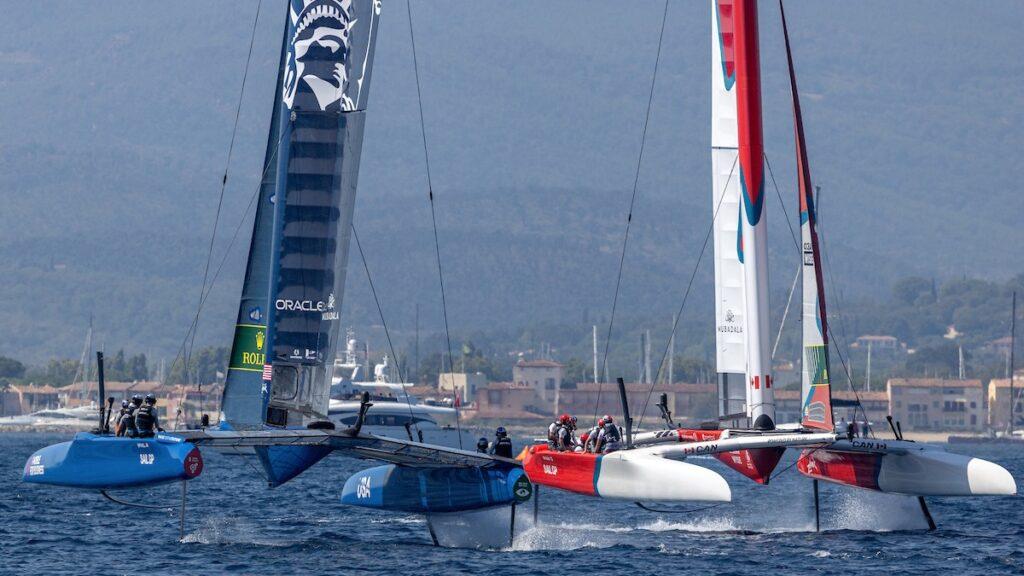
Because of all this, the gap between traditional racing yachts that sail “on” the water and F50 catamarans that “fly” above it is so large that many consider that SailGP should actually be considered a different sport.
What do you think? Is SailGP still a “Sailing” sport or has it morphed into a sport of flying over the water.
¿Quieres saber más? Contacta con un experto...